

Sustainable Farming: The Role of Drone Technology
In recent years, the agricultural sector has faced numerous challenges, including climate change, soil degradation, and the need for increased food production. As the global population continues to rise, farmers are under pressure to adopt more sustainable practices that not only enhance productivity but also protect the environment. One of the most promising advancements in this area is the integration of drone technology into sustainable farming practices. Drones are revolutionizing the way farmers monitor crops, manage resources, and make data-driven decisions.
Understanding Drone Technology in Agriculture
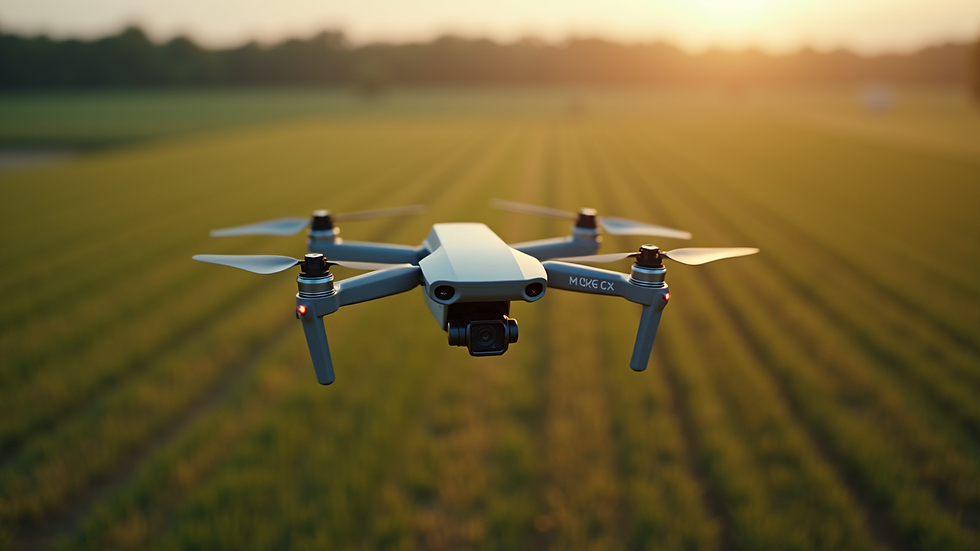
Drones, or unmanned aerial vehicles (UAVs), are equipped with cameras and sensors that allow them to capture high-resolution images and collect data from the air. In agriculture, these devices can be used for a variety of purposes, including:
Crop monitoring: Drones can provide real-time insights into crop health, growth patterns, and potential pest infestations.
Soil analysis: By analyzing soil moisture levels and nutrient content, drones help farmers make informed decisions about irrigation and fertilization.
Precision agriculture: Drones enable farmers to apply fertilizers and pesticides more accurately, reducing waste and minimizing environmental impact.
Benefits of Using Drones in Sustainable Farming
The adoption of drone technology in agriculture offers several significant benefits:
Increased Efficiency: Drones can cover large areas of farmland in a fraction of the time it would take traditional methods. This efficiency allows farmers to focus on other critical tasks.
Cost Savings: By optimizing resource use, such as water and fertilizers, drones can help farmers reduce operational costs. For example, targeted pesticide application can lower chemical usage by up to 90%.
Enhanced Data Collection: Drones provide farmers with detailed aerial imagery and data analytics, enabling them to make informed decisions based on real-time information.
Environmental Protection: By promoting precision agriculture, drones help minimize the environmental impact of farming practices. This includes reducing chemical runoff into waterways and conserving water resources.
Practical Applications of Drones in Sustainable Farming
Crop Health Monitoring
One of the primary applications of drone technology in agriculture is crop health monitoring. Drones equipped with multispectral cameras can capture images that reveal how plants are performing. By analyzing these images, farmers can identify areas of stress, disease, or nutrient deficiency.
For instance, a study conducted by the University of California found that drones could detect water stress in crops up to two weeks before traditional methods. This early detection allows farmers to take corrective action, ensuring healthier crops and higher yields.
Precision Irrigation
Water scarcity is a growing concern in many agricultural regions. Drones can play a crucial role in precision irrigation by mapping out areas of a field that require more or less water. Using thermal imaging, drones can identify variations in soil moisture levels, allowing farmers to irrigate more efficiently.
A notable example is the use of drones in vineyards. Farmers can monitor vine health and adjust irrigation schedules based on real-time data, leading to improved grape quality and reduced water usage.
Pest and Disease Management
Drones can also assist in pest and disease management. By providing detailed aerial imagery, farmers can spot pest infestations early and apply targeted treatments. This not only saves money but also reduces the amount of pesticides used, contributing to more sustainable farming practices.
For example, a vineyard in California utilized drone technology to monitor for grapevine pests. By identifying infestations early, the vineyard reduced pesticide application by 40%, leading to healthier vines and a more sustainable operation.
Crop Mapping and Planning
Drones can create detailed maps of farmland, providing farmers with valuable insights for planning and decision-making. These maps can highlight variations in soil type, moisture levels, and crop health, allowing farmers to tailor their management practices to specific areas of their fields.
For instance, a farmer in Iowa used drone mapping to identify areas of his field that were underperforming. By adjusting his planting strategy based on this data, he increased his overall yield by 15%.
Challenges and Considerations
While drone technology offers numerous benefits, there are also challenges that farmers must consider:
Regulatory Issues: In many countries, regulations surrounding drone usage in agriculture are still evolving. Farmers must stay informed about local laws and obtain necessary permits.
Initial Costs: The upfront investment in drone technology can be significant. However, many farmers find that the long-term savings and increased efficiency justify the initial expense.
Technical Skills: Farmers may need training to effectively operate drones and analyze the data collected. Investing in education and training is essential for maximizing the benefits of this technology.
The Future of Drone Technology in Sustainable Farming
As technology continues to advance, the role of drones in sustainable farming is expected to grow. Innovations such as artificial intelligence (AI) and machine learning will enhance the capabilities of drones, allowing for even more precise data analysis and decision-making.
For example, AI-powered drones could automatically identify crop diseases and recommend treatment options based on historical data. This level of automation could significantly reduce the labor burden on farmers and improve overall efficiency.
Conclusion
Drone technology is transforming the agricultural landscape, offering farmers innovative tools to enhance productivity while promoting sustainable practices. By adopting drones for crop monitoring, precision irrigation, and pest management, farmers can make informed decisions that benefit both their operations and the environment.
As the agricultural sector continues to evolve, embracing technology like drones will be crucial for meeting the challenges of the future. Farmers who invest in this technology today will be better equipped to face the demands of tomorrow's food production.
The journey towards sustainable farming is ongoing, and drone technology is a vital part of that journey. By leveraging these tools, farmers can not only improve their yields but also contribute to a healthier planet for future generations.


Comments